blog
touching the sublime
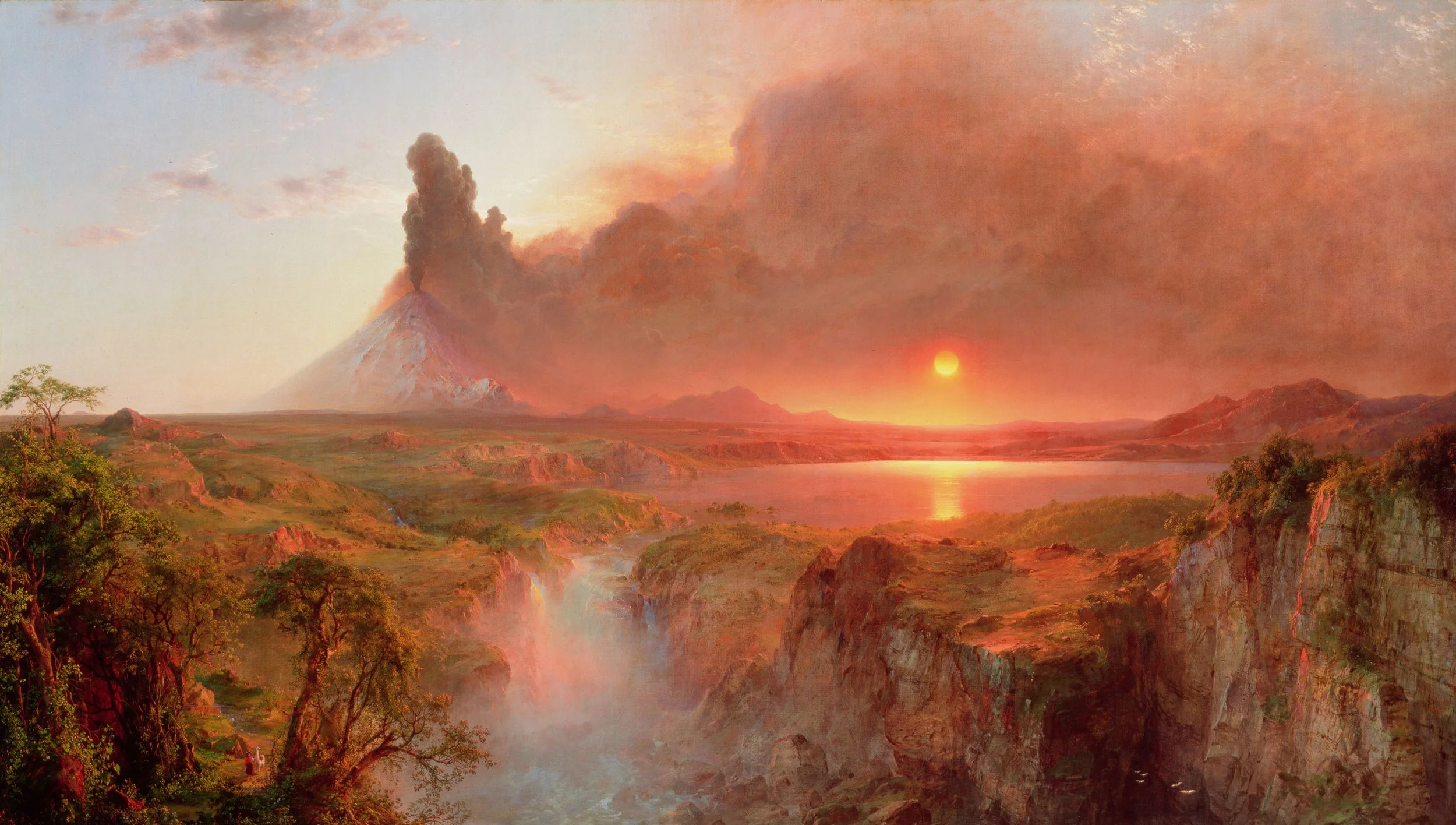
Cotopaxi by Frederic Edwin Church, 1862
I just finished reading this essay by Candice Wheule about women’s fascination with loving monsters. Think Twilight, Beauty & The Beast, del Toro’s Frankenstein.
Candice touches on the Romantic idea of the sublime, and says:
“Maybe the current discourse on monsterfucking and embarrassing boyfriends both hover just above the deeper truth: women turn to monsters because men, on the whole, have failed so completely that women are forced back toward fantasy—toward the one place the Sublime still feels possible.”
Is loving a monster loving the sublime?
Edmund Burke wrote in 1757, ‘Whatever is in any sort terrible or is conversant about terrible objects or operates in a manner analogous to terror, is a source of the sublime.’ (A Philosophical Enquiry into the Origin of our Ideas of the Sublime and Beautiful)
It instantly makes me think of the ‘immersive experiences’ we have here in London. We’ve got ‘The Legend of the Titanic’ where guests can “relive one of the ship’s most poignant moments” via LCD screens and VR headsets.
Similarly, there’s "The Last Days of Pompeii". Another immersive exhibition, where you get to "witness one of history's most dramatic events unfold."
We love to get as close as we can to the danger, without ever touching it.
Stories of falling in love with bloodsucking, bonecrushing monsters feels more ethical than wandering round a recreation of a natural disaster that wiped out over 2,000 people.
I don’t think we go to the Titanic or Pompeii exhibition to feel empathy for the people involved in these disasters. I think there’s a baser desire, and that’s to experience something massive, something terrifying, something unthinkable. We want to experience something outside of our everyday. But in a safe way, of course! We want to take off the headset, leave the exhibition centre and go get a burger afterward!
I wrote a song about an earthquake simulator in the Natural History Museum, which is also a kind-of love song? The room simulates the 1995 Kobe earthquake in Japan, which killed at least 5,000 people. The simulator is a shaky floor in a Japanese grocery store setting. When I went there as a kid it made the biggest impact on me, because it was fun. That juxtaposition between the actual event and the simulated experience is something I can’t really reconcile in my head.
My song, 'Earthquake Room,' is about a date I went on at the museum, but also this idea of wanting to experience something (love!) safely and quickly, without any of the true risk. Brushing up against the sublime.
I find it really interesting, this wrestling between danger and safety. The distance from the disaster which creates the sublime.
Are we allowed to pretend? Are we allowed to experience it?
Is it okay that we get to walk away after?

you don’t need a notebook system
What’s up with our obsessive desire to make life feel rigid?
We take soft things and fence them within parameters, schedules, regimes. Mornings become a “morning routine,” daily habits get tracked on a chart, reading wishlists become a “syllabus”.
I’m talking to a certain kind of person here. Put your hand up if you are a:
former high school over-achiever
stationery addict
eldest daughter with a Muji pen collection
retired bullet journal devotee
Hi. I am one of you.
Something I’ve noticed lately is an uptick in conversations around “notebook systems,” or “ecosystems” which promise ways of organising thoughts, ideas, to do lists, collages, reading notes, morning pages, into a series of different notebooks. Perhaps there’s even conversation between notebooks, where passages or items get copied out and logged in different places.
I get the appeal. One notebook for this, one notebook for that. I too am a woman who believes that a notebook with just the right page density and spine flexibility might change my life’s trajectory.
But every time I sit down to watch a youtube video or read an essay about someone’s “notebook system”, I never end up using it. I just bask in the idea of a perfectly organised life.
[Homer Simpson voice] Mmmmmm… idea of a perfectly organised life.
So let me offer an alternative:
Let it be messy.
My favourite art teacher, Lynda Barry, asks her cartooning students to use a composition notebook on a daily basis. She tells them to put anything and everything in there. Her list of “greenlit” categories for composition books include the following:
Diary entries
Drawings
Dreams
Doodles
Shopping lists
To do lists
Daily comics
Spirals, shapes
Fears and anxieties
Quotes
Class notes
And it goes on and on.
Sometimes I wish I could separate my life into categories. But so often, things run into each other:
you write down a name whilst on a phone conversation and then start doodling a picture
you go shopping for groceries and think up a poem in the aisles
you meet a friend for coffee and end up talking about your job hunt
Life isn’t always easy to separate and catalog. So why do we insist on it?
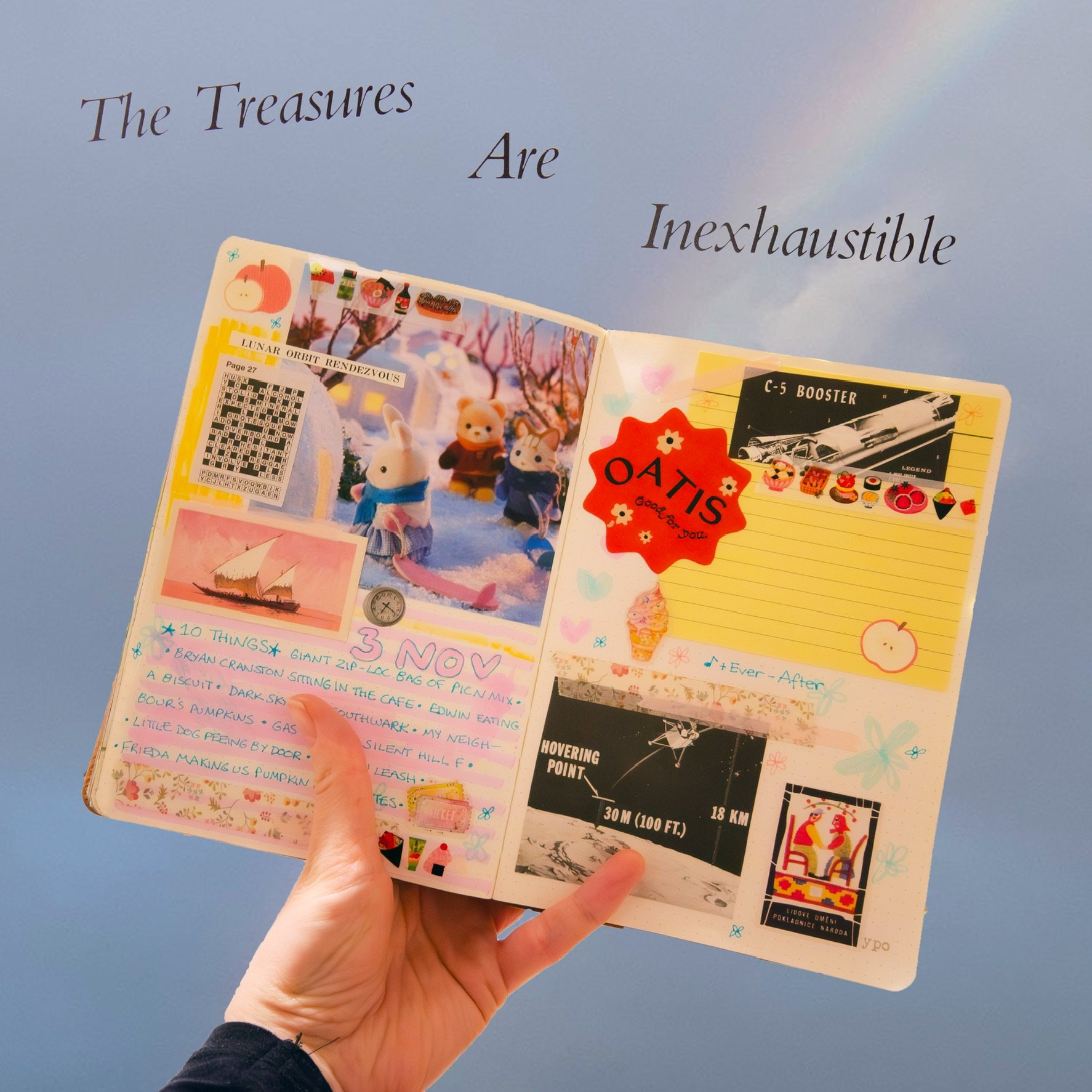
I have a notebook which I tried to wrestle into a category. First it was a bullet journal. Then it was a manifestation journal. Then it was a daily diary.
Then I stopped asking it to be something specific, and just let it be.
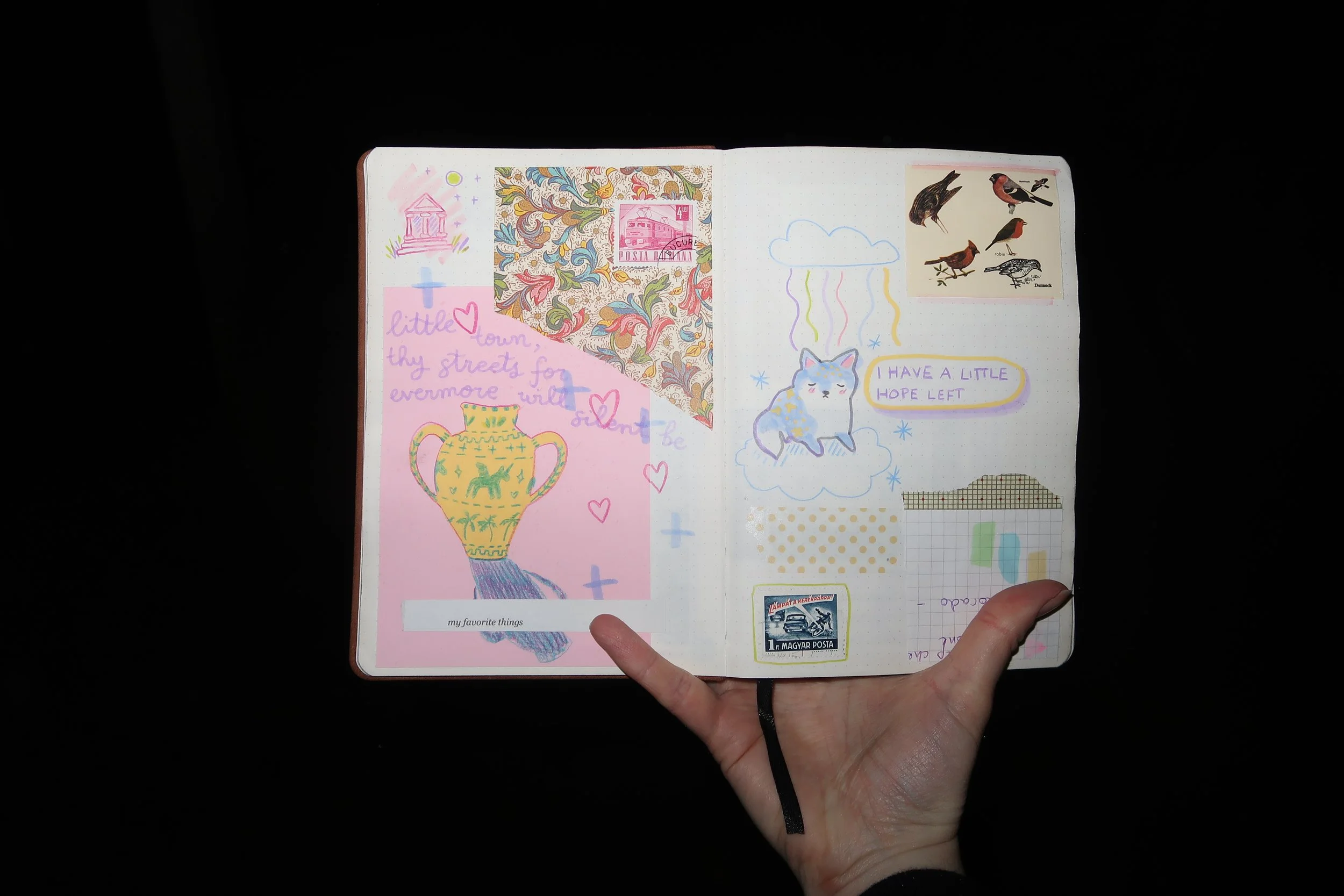
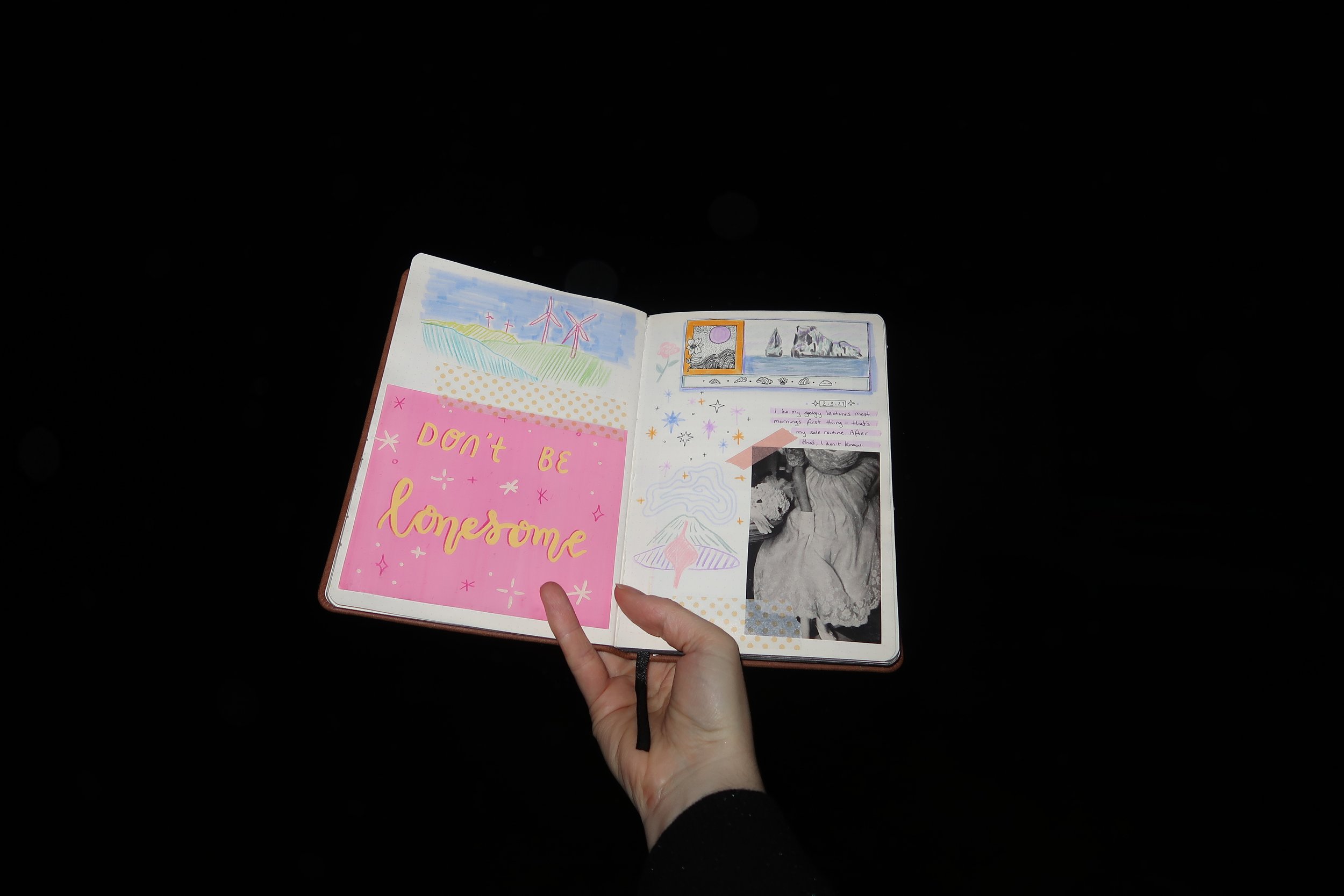
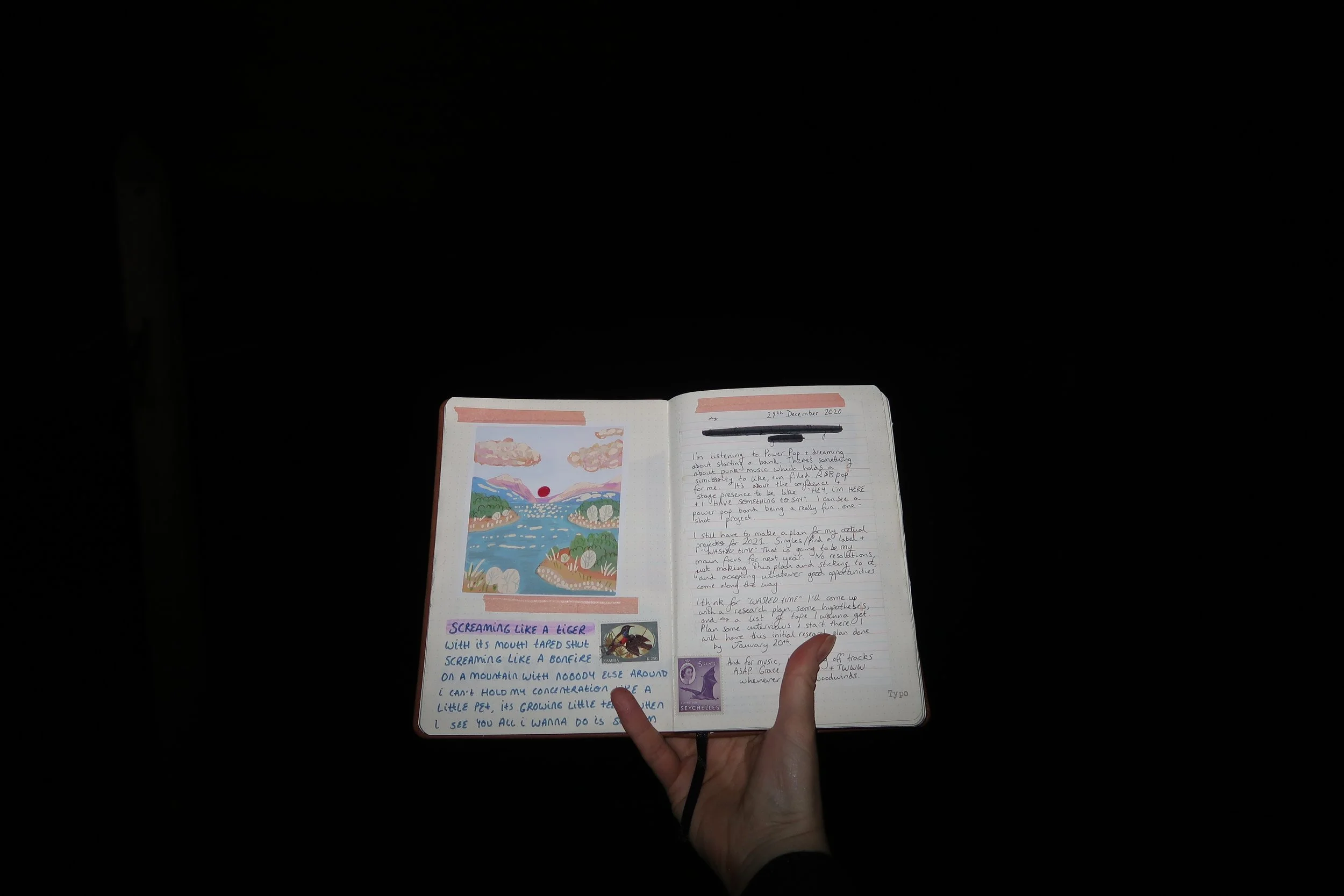
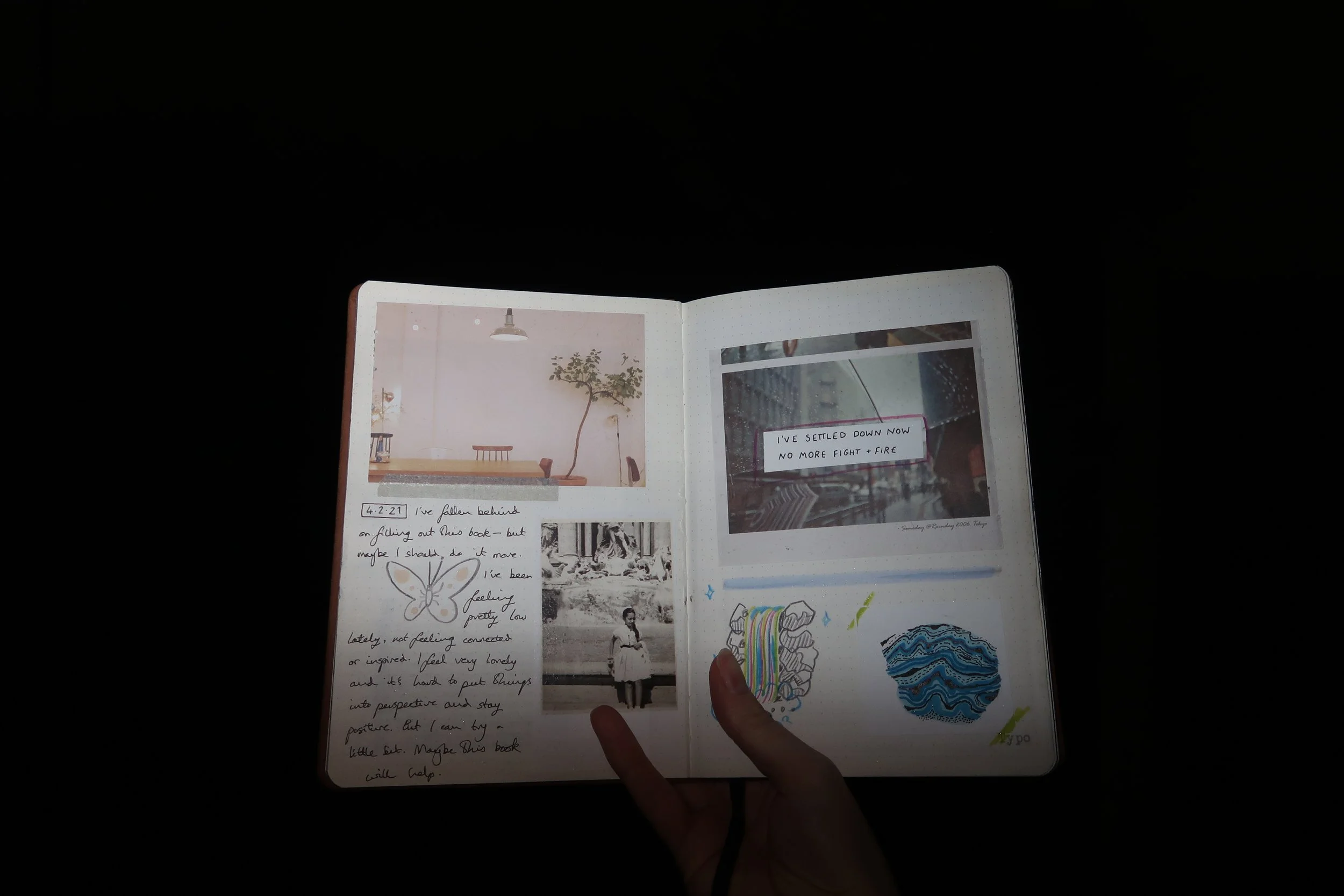
It’s ok to not have a system for your, uh, stationery. Your life will be just as good if you write your to do list on diner napkins. You can fill up a blank page however you want. You can stick in bus tickets and write in ugly to do lists or phone call doodles. You can make a mind map on one page and then write a poem for your dog on the other.
Consider this your permission slip to loosen your grip on the things which make life fun.